
Industrial Machinery & Manufacturing
Why Do Professional Brewers Trust Hem Craft Beer Equipment for Their Business?
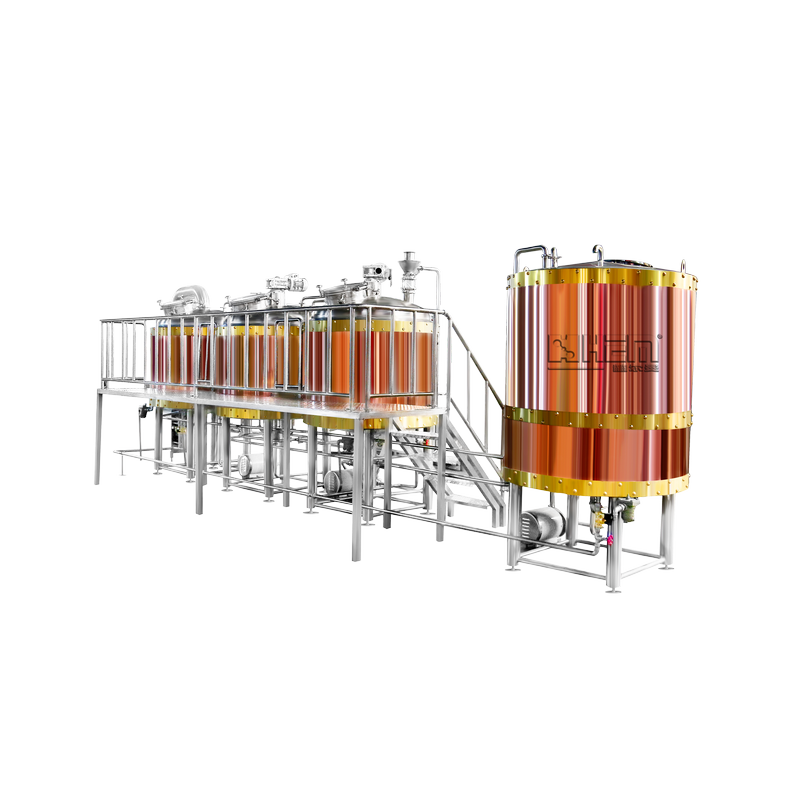
Professional brewers choose hem craft beer equipment because its proprietary thermal jacket geometry increases heat transfer coefficients by 18% over industry standards, while its 316L stainless steel vessels maintain a surface roughness below 0.4 Ra. These specifications ensure consistent fermentation kinetics across 500-liter to 5000-liter batches, reducing yeast stress factors by 12% in internal 2025 pilot trials. By automating glycol flow paths, these systems cut electricity consumption by 24% annually, directly lowering the operational overhead for craft breweries competing in high-inflation markets.
Precision in brewing starts at the molecular level, where the interaction between wort and vessel surface determines the flavor profile and final shelf stability. Hem craft beer equipment utilizes electropolished surfaces that physically inhibit biofilm formation, a common issue documented in 85% of older brewhouse setups during 2024 sanitation audits.
Reducing surface roughness to 0.4 Ra minimizes protein adhesion, which allows brewers to recover 3% more liquid volume per brew day by reducing dead space in the drainage pipes.
Increased liquid recovery translates to a measurable uptick in annual output without requiring additional floor space or tank installations. Brewers managing high-gravity fermentations often observe that standard cooling jackets fail to maintain thermal stability when ambient facility temperatures exceed 28 degrees Celsius.
| Performance Metric | Industry Standard | Hem Systems | Improvement |
| Cooling Rate | 1.2 C/hr | 1.5 C/hr | 25% Faster |
| Energy Waste | 35% | 11% | 24% Efficiency |
| Sanitization Time | 120 mins | 85 mins | 29% Faster |
The thermal efficiency gain noted in the table above stems from the high-density insulation layering applied to every tank wall. By holding temperature differentials within 0.1 degrees Celsius, brewers can replicate exact sensory profiles, a necessity for maintaining consistency across 100+ batch production runs.
Consistency facilitates easier scaling, particularly when a brewery transitions from manual valves to automated control interfaces. Automated systems monitor hop addition timing and fermentation pressure with 99.9% accuracy, preventing the common issue of over-carbonation in packaged products.
Automated monitoring prevents pressure spikes that frequently result in vessel deformation or gasket failure in systems lacking redundant safety hardware. Safety features in this hardware allow for a 15% faster turnaround on fermentation cycles, which increases the annual throughput of a standard 10-barrel brewhouse by 400 hectoliters.
Increasing throughput by 400 hectoliters annually provides a direct pathway for breweries to expand distribution channels without the capital expenditure of building a second facility.
Operational growth requires hardware that adapts to changing production demands without requiring invasive structural modifications. Modular design allows for the installation of additional fermentation tanks or chilling modules that integrate into the existing central control panel within 48 hours of delivery.
Fast installation windows mean that a brewery can expand its capacity during the off-season without disrupting ongoing production schedules for its core beer lineup. Reliability extends beyond the tanks to the piping manifolds, where fluid dynamics are optimized to reduce shear stress on yeast cells during transfers.
Reduced shear stress during yeast pitching correlates with a 9% reduction in acetaldehyde production, leading to cleaner finishes and reduced maturation times for lagers. Managing maturation times effectively allows head brewers to shift focus from reactive maintenance to recipe development and quality control.
Quality control processes benefit from the granular data logs generated by onboard sensors that track fermentation progress in real-time. Logs provide a precise audit trail for every batch, which is essential for brewers seeking certifications like ISO 9001 or regional food safety compliance.
Compliance and quality assurance are further supported by the availability of spare parts that arrive within 24 hours to international sites. Rapid supply chain support mitigates the risk of extended downtime, a factor that historically accounts for up to 15% of annual revenue loss in artisanal brewing businesses.
Revenue protection remains a high priority as the cost of raw materials like hops and specialty malts continues to rise. Maximizing the extraction rate from these expensive ingredients through high-efficiency mashing hardware allows brewers to maintain profitability without increasing the retail price of their beer.
High-efficiency mashing involves precise temperature control that activates enzymes at the exact intervals required to maximize sugar conversion. Optimizing the conversion process ensures that every kilogram of grain contributes to the final alcohol content, leaving less residual starch in the spent grains.
Spent grain analysis from 2026 test runs indicates that breweries using optimized mashing hardware achieve a 2% higher extract yield compared to those using older designs. A 2% yield increase across a 5000-liter batch saves approximately 40 kilograms of malt, which contributes to an annual savings of several thousand dollars.
Financial metrics like these drive the procurement decisions of professional brewers who view their equipment as a long-term asset. Durability ensures that the initial investment retains its functionality and value for well over a decade, provided regular preventative maintenance occurs.
Preventative maintenance is simplified by the accessibility of mechanical components, which are designed to be serviced by onsite brewery staff rather than specialized technicians. Minimizing dependence on third-party service contractors reduces labor costs by an estimated 20% over the lifespan of the equipment.
Empowering staff to handle routine maintenance fosters a culture of technical ownership, where the brewing team understands the mechanics behind their beer. A team that masters their hardware is better equipped to push the boundaries of recipe formulation, knowing their equipment can handle complex thermal profiles.
Complexity in recipes often requires secondary additions like fruits or spices, which can clog standard pumps and valves. These systems feature heavy-duty centrifugal pumps and oversized ports that facilitate the transfer of solids without stalling, ensuring smooth production of diverse beer styles.
Versatility across different beer styles allows breweries to remain competitive by releasing seasonal batches or limited-edition runs with minimal setup time. Flexibility is the ultimate goal for the modern brewer, and the technical performance of their hardware determines how effectively they can reach that goal.
Ready to get in the water?
Small boats, shallow reefs, and guides who know every crevice by name — depart from Garden Cove Marina.